
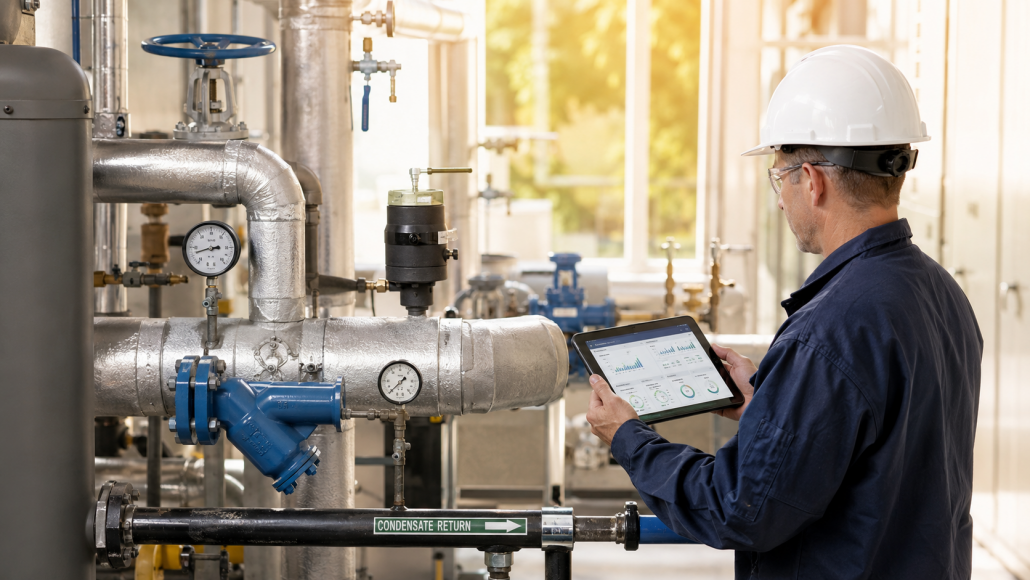
How Can Facilities Improve Steam System Efficiency Before Summer Slowdowns?
For many industrial and commercial facilities, June brings a shift in operating conditions. Heating loads may decrease, production schedules may change, and summer maintenance planning begins.
That makes early summer a valuable window to improve steam system efficiency.
At Colton Industries, we know that steam efficiency is not about one component. It depends on how traps, valves, strainers, piping, and condensate return systems work together. A focused summer efficiency review can reduce energy waste and prepare the system for the next peak season.
Why summer is a good time to improve steam efficiency
Steam systems often receive the most attention during winter emergencies. But summer is when facilities usually have more flexibility to inspect, repair, and optimize.
Summer is ideal because:
- Heating demand may be lower
- Some systems may be partially offline
- Maintenance teams have more scheduling flexibility
- Repairs can be completed before fall startup
- Energy savings can be captured before the next heavy-load season
Instead of waiting for a cold-weather failure, facilities can use summer to strengthen the system.
Step 1: Test steam traps for energy loss
Steam traps are one of the biggest opportunities for efficiency improvement. A trap that fails open can waste live steam continuously. A trap that fails closed can reduce heat transfer and create condensate buildup.
During a summer efficiency review, test traps on:
- Steam mains
- Drip legs
- Heat exchangers
- Process equipment
- Steam tracing lines
- Condensate return points
Look for traps that are:
- Blowing live steam
- Plugged or cold
- Cycling abnormally
- Leaking externally
- Improperly sized for the application
Replacing failed traps can reduce wasted energy and improve system reliability.
Step 2: Clean strainers to reduce pressure drop
Strainers protect downstream equipment, but they need regular attention. A clogged strainer can restrict flow, increase pressure drop, and reduce system performance.
Check:
- Y-strainers
- Basket strainers
- Temporary strainers left in place after startup
- Screens protecting steam traps and control valves
Cleaning or replacing screens helps maintain proper flow and protects Colton valves, traps, and pipeline components from debris-related damage.
Step 3: Repair leaking or passing valves
A valve that does not fully close can waste energy and create unwanted heat transfer. In steam systems, leaking valves may keep lines hot when they should be isolated.
Inspect valves for:
- Seat leakage
- Packing leaks
- Difficult operation
- Corrosion
- Vibration or chatter
- Poor control response
Repairing or replacing problem valves can improve isolation, reduce steam loss, and make the system easier to operate.
Step 4: Improve condensate return
Returning hot condensate saves energy, water, and chemical treatment costs. If condensate return is restricted or unreliable, the facility may lose valuable heat and treated water.
Review:
- Condensate pumps and receivers
- Return line slope and supports
- Low points and sags
- Leaks in return piping
- Flash steam loss
- Trap discharge behavior
A healthy condensate return system is one of the strongest contributors to overall steam efficiency.
Step 5: Identify steam lines that can be isolated
During summer, some steam lines may not be needed. Leaving unnecessary lines active can waste energy through radiation loss, trap cycling, and valve leakage.
Ask:
- Which lines are required during summer?
- Which areas can be isolated safely?
- Are isolation valves working properly?
- Are idle lines still being heated unnecessarily?
This review can help reduce waste while also identifying valves that need repair or replacement.
Final takeaway
Summer is not just a slow season for steam systems. It is an opportunity to improve efficiency, reduce energy loss, and prepare for the next period of high demand.
By testing steam traps, cleaning strainers, repairing valves, improving condensate return, and reviewing idle lines, facilities can make meaningful gains in performance and reliability.
Colton Industries supports these efforts with steam traps, strainers, valves, and pipeline specialties built for dependable service in North American facilities.
