
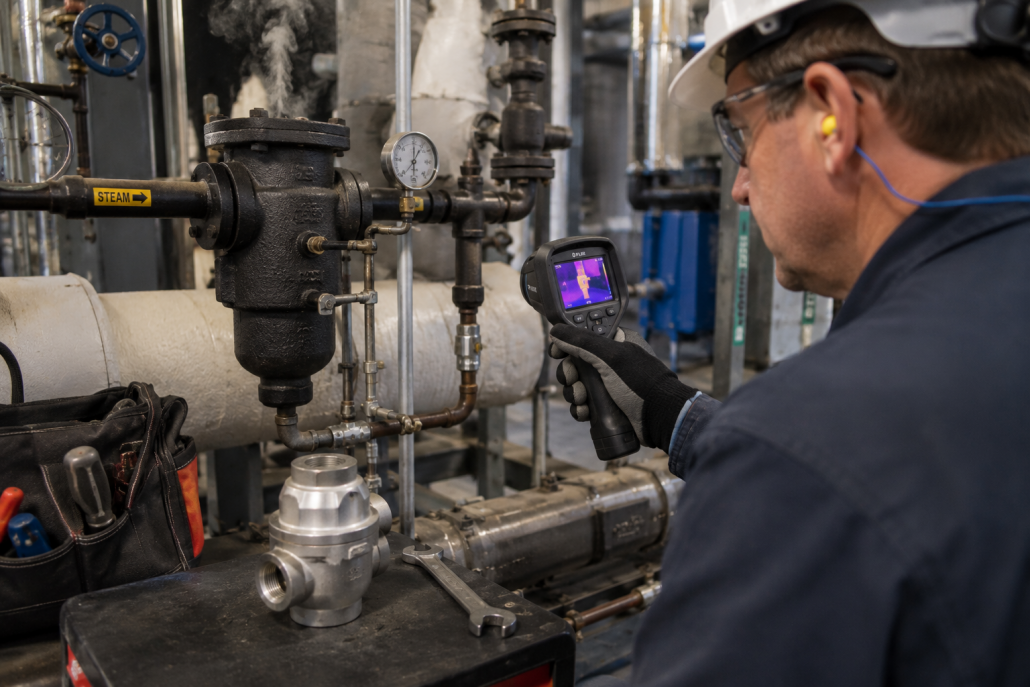
How Do You Know When It’s Time to Replace a Steam Trap?
Steam traps are small components with a big job. They remove condensate and air from the system while preventing live steam from escaping. When a steam trap fails, the impact can show up as wasted energy, poor heating, water hammer, or equipment damage.
For many facilities, May is a practical time to evaluate steam trap performance. Winter loads have passed, maintenance teams can review trouble spots, and there is time to replace failed traps before the next high-demand season.
At Colton Industries, we help facilities select steam traps that match real-world operating conditions. Knowing when to replace a trap is just as important as choosing the right one in the first place.
Common signs a steam trap needs replacement
A steam trap may need to be replaced if you notice:
- Continuous live steam discharge
- No condensate discharge when there should be flow
- Cold process equipment or poor heating
- Water hammer in steam or condensate lines
- Unusual cycling or noise
- Excessive wear, corrosion, or leakage
- Repeated maintenance on the same trap
Not every symptom automatically means replacement is required, but these signs should trigger inspection.
Sign 1: The trap is blowing live steam
A trap that fails open allows live steam to pass into the condensate return system. This wastes energy and can increase system pressure and temperature in areas not designed for it.
Warning signs include:
- Visible steam at discharge points
- Hot condensate return lines
- Unusually high energy usage
- Noise or turbulence downstream
A failed-open trap is often one of the easiest failures to overlook because the line may still feel hot and active. However, it can create significant energy loss over time.
Sign 2: The trap is stuck closed or plugged
A trap that fails closed prevents condensate from draining. This can cause water to back up into equipment or piping.
Symptoms may include:
- Cold heat exchangers
- Poor temperature control
- Flooded coils
- Water hammer
- Slow startup
- Reduced process performance
This type of failure can be especially damaging because condensate buildup can create unsafe operating conditions.
Sign 3: Water hammer is occurring near the trap station
Water hammer is a serious warning sign. It often means condensate is collecting where it should not be, then moving rapidly through the system.
Potential causes include:
- Failed steam traps
- Undersized traps
- Poorly installed drip legs
- Blocked strainers
- Improper condensate return design
If water hammer is occurring near a steam trap station, the trap and surrounding components should be inspected immediately.
Sign 4: The trap no longer matches the application
Sometimes a steam trap is not “failed” mechanically, but it is still wrong for the application.
This can happen when:
- Process conditions have changed
- Pressure has increased or decreased
- Equipment load has changed
- A line has been repurposed
- The original trap was selected by pipe size only
A properly selected trap should match the application, pressure, condensate load, and back pressure. If operating conditions have changed, replacement may be the better long-term solution.
Sign 5: The same trap keeps needing attention
If a steam trap requires repeated service, replacement may be more cost-effective than continued repair.
Recurring issues may point to:
- Wrong trap type
- Dirty system conditions
- Incorrect installation
- Material mismatch
- Oversizing or undersizing
A repeated failure pattern is a sign to review both the trap and the application.
Repair or replace?
Repair may make sense for larger or specialized trap assemblies. However, replacement is often the best option when the trap is:
- Small or relatively low-cost
- Heavily worn
- Installed in a critical location
- No longer appropriate for the application
- Creating energy loss or reliability issues
A replacement also creates an opportunity to standardize trap types across the facility, reduce spare parts complexity, and improve future maintenance.
Final takeaway
A steam trap should not be ignored just because the line is still operating. Failed traps can waste steam, flood equipment, cause water hammer, and increase maintenance costs.
If a trap is blowing live steam, failing closed, cycling abnormally, or no longer matching the application, it may be time to replace it.
Colton Industries provides steam traps and pipeline specialties designed to support safe, reliable steam system operation across North America. With the right trap in the right application, facilities can improve efficiency, reduce risk, and plan maintenance with greater confidence.
