
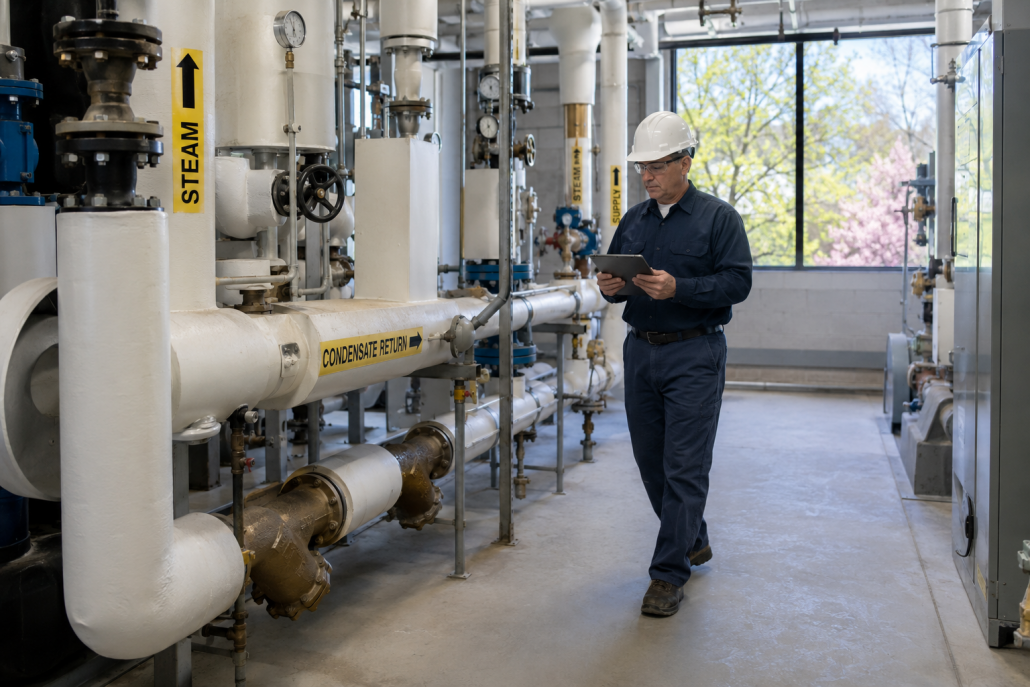
What Should Facilities Inspect After Spring Startup in Steam and Condensate Systems?
Spring startup is an important transition point for steam and condensate systems. After a long winter season, many facilities reduce heating loads, adjust operating schedules, or bring certain systems back online after partial shutdowns.
That makes May a smart time to inspect the system, document trouble spots, and address small issues before summer maintenance planning begins.
At Colton Industries, we know that reliable steam systems depend on more than one component. Steam traps, strainers, valves, and condensate return lines all work together. A focused post-startup inspection helps keep that system running safely, efficiently, and consistently.
Why spring startup inspections matter
Steam and condensate systems often go through heavy cycling during winter. By spring, components may show signs of wear, strain, or debris buildup.
A spring inspection can help identify:
- Steam traps that failed during winter
- Strainers that are partially clogged
- Valves that are leaking or difficult to operate
- Condensate return issues
- Low points where water may be collecting
- Insulation damage from moisture or temperature swings
Catching these issues in May gives your team time to plan repairs before the next heavy-use season.
Step 1: Check steam trap performance
Steam traps are one of the first places to inspect after winter operation. A failed steam trap can waste energy, cause drainage issues, or contribute to water hammer.
During inspection, look for traps that are:
- Cold when they should be operating
- Blowing live steam continuously
- Cycling erratically
- Installed incorrectly
- Missing upstream strainers or blowdown access
A properly operating steam trap should remove condensate while keeping live steam in the system. If a trap is plugged, stuck open, or undersized for the application, it can create performance problems throughout the line.
Colton Industries supplies steam traps designed for demanding industrial and commercial applications, but every trap should be checked periodically to confirm it is performing as intended.
Step 2: Inspect strainers for debris buildup
Strainers protect downstream equipment from scale, dirt, weld slag, and other solids. After winter operation or system startup, debris may collect inside Y-strainers, basket strainers, and temporary strainers.
During a spring inspection, facilities should:
- Check differential pressure where gauges are installed
- Clean or blow down Y-strainers as needed
- Remove and inspect baskets or screens
- Look for damaged or collapsed screens
- Confirm strainers are installed in the correct orientation
A clogged strainer can restrict flow, reduce system efficiency, and put stress on valves, traps, pumps, and heat exchangers. Keeping strainers clean is one of the simplest ways to protect the entire system.
Step 3: Review valve operation
Valves should be checked for smooth operation, leakage, and proper shutoff.
Pay attention to:
- Isolation valves that do not fully close
- Control valves that hunt or fluctuate
- Check valves that chatter or fail to prevent backflow
- Packing leaks around stems
- Corrosion or visible wear around valve bodies
Even small leaks can become bigger problems over time. A spring inspection gives maintenance teams the opportunity to identify which valves need adjustment, repair, or replacement.
Step 4: Walk condensate return lines
Condensate return is often where hidden problems show up. If condensate does not return properly, the entire steam system can become less efficient and less reliable.
Look for:
- Sagging lines
- Low points holding condensate
- Pump or receiver issues
- Blocked returns
- Unusual noise
- Leaks around fittings and valves
Poor condensate return can lead to water hammer, corrosion, and wasted energy. When condensate return systems are clean and properly drained, the steam system performs more reliably.
Step 5: Document winter trouble spots
Spring is also the right time to ask operators and maintenance teams what they noticed during the colder months.
Questions to ask include:
- Which lines were noisy during startup?
- Where did heating performance drop?
- Which traps or valves required attention?
- Did any strainers plug repeatedly?
- Were there any temporary fixes that need permanent repairs?
This field knowledge is extremely valuable. It helps prioritize repairs and gives your team a clearer plan before the next heating season.
Final takeaway
A spring startup inspection helps facilities move from reactive maintenance to proactive planning. By checking steam traps, strainers, valves, condensate return lines, and insulation, your team can identify small issues before they become costly failures.
Colton Industries supports North American facilities with steam traps, strainers, valves, and pipeline specialties built for reliable performance. A strong inspection routine helps those components do what they were designed to do: keep steam and condensate systems running safely and efficiently.
