
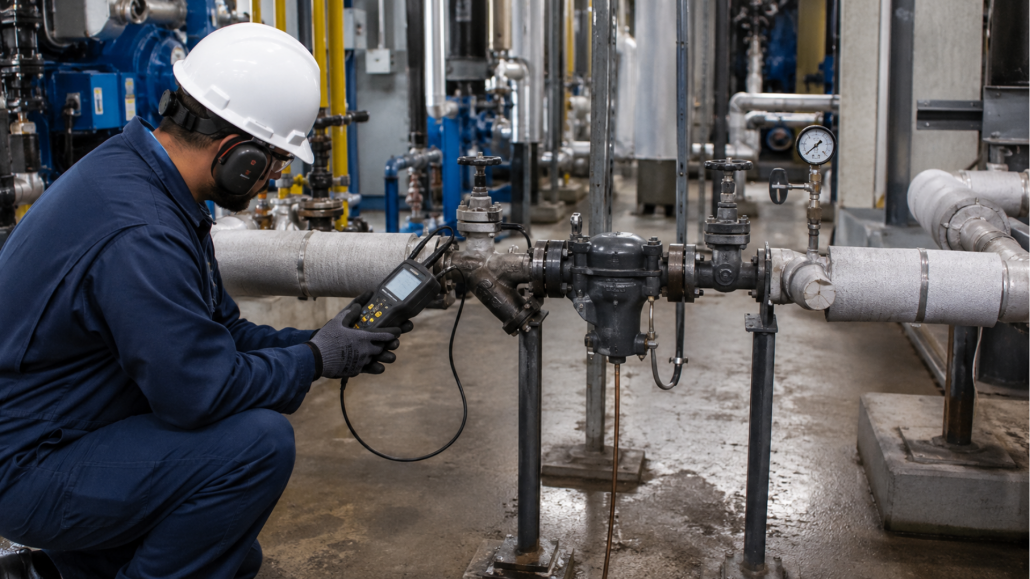
How Do You Know When a Steam Trap Is Failing? 7 Signs to Watch For
How Do You Know If a Steam Trap Is Bad?
A steam trap may be failing if it continuously passes live steam, stops removing condensate, causes equipment to heat slowly or unevenly, contributes to water hammer, or develops unusual temperature or operating patterns.
Steam traps typically fail in one of two ways: they leak steam or they stop removing condensate properly. Both conditions can affect system efficiency, reliability, and equipment performance.
Because several steam-system problems can produce similar symptoms, maintenance teams should confirm the cause before automatically replacing the trap.
Colton Industries offers a range of steam traps for commercial and industrial steam applications, including float and thermostatic, balanced pressure thermostatic, thermodynamic, inverted bucket, and bi-metal designs.
Routine inspection can help identify leaking, blocked, or inefficient steam traps before they affect the wider steam system.
What Does a Steam Trap Do?
A steam trap removes condensate and non-condensable gases such as air from a steam system while preventing useful live steam from escaping.
Although steam traps are relatively small components, their performance can affect the operation of an entire steam or condensate system.
A properly operating steam trap helps:
- Remove condensate from steam lines and equipment
- Minimize live steam loss
- Maintain effective heat transfer
- Reduce condensate accumulation
- Support reliable steam-system operation
When a trap fails, the consequences depend largely on whether it fails open or closed.
A leaking trap can waste steam and energy. A blocked trap can allow condensate to accumulate, affecting heat transfer and potentially contributing to water hammer or other operating problems.
Colton Industries also discusses the efficiency impact of failed traps in its guide on how upgrading steam traps can lower plant energy costs.
What Are the Signs of Steam Trap Failure?
The exact symptoms vary based on the type of trap, application, pressure, load, installation, and operating conditions.
However, these seven signs should prompt a closer inspection.
1. Live Steam Appears to Be Continuously Passing Through the Trap
A trap that continuously passes live steam may have failed open.
When this happens, useful steam can escape into the condensate return system instead of remaining available for heating or process work.
Possible consequences include:
- Increased steam consumption
- Higher energy costs
- Excessive heat in the condensate return system
- Reduced overall steam-system efficiency
Does visible steam mean a steam trap has failed?
Not necessarily.
Flash steam can sometimes look like live steam leakage.
Hot condensate can partially vaporize when it moves from a higher-pressure environment into a lower-pressure environment. This means a visible steam plume alone is not always enough to confirm that a trap is leaking.
Testing should be used to distinguish normal discharge behavior from actual live-steam loss.
2. Condensate Is Not Draining Properly
A trap that is blocked, failed closed, undersized, improperly applied, or unable to overcome downstream pressure may stop discharging condensate effectively.
Signs may include:
- Condensate backup
- Flooded equipment
- Poor heating
- Slow startup
- Unstable temperatures
- Water accumulating upstream of the trap
Possible causes include:
- Internal wear
- Dirt or scale
- Clogged screens
- Incorrect trap sizing
- Insufficient differential pressure
- Installation problems
- Steam locking
- Excessive condensate return pressure
This is an important distinction:
Poor condensate drainage does not automatically mean the steam trap itself is mechanically damaged.
The trap may be functional but incorrectly selected or operating under conditions that prevent proper discharge.
That is why troubleshooting should evaluate the trap and the surrounding system.
3. You Hear Water Hammer or Unusual Piping Noise
Water hammer is one of the most important warning signs to investigate in a steam system.
It can occur when condensate accumulates inside steam piping and is moved rapidly through the system. Proper condensate removal is therefore an important part of preventing water hammer.
Can a bad steam trap cause water hammer?
Yes. A steam trap that does not remove condensate effectively can contribute to conditions that produce water hammer.
However, a failed trap is not the only possible cause.
Water hammer can also be related to:
- Improper pipe slope
- Poor drainage design
- Startup practices
- Condensate accumulation
- Incorrect trap placement
- Pressure conditions
- Piping configuration
For that reason, maintenance teams should avoid simply replacing the closest trap without determining why condensate is accumulating.
Water hammer should be treated as a system-level symptom that requires root-cause investigation.
4. Equipment Is Heating Slowly or Unevenly
A process or piece of equipment that previously reached temperature consistently but now heats slowly may indicate a condensate-removal issue.
When condensate accumulates inside steam-using equipment, it can interfere with effective heat transfer.
Maintenance teams may notice:
- Longer warm-up periods
- Uneven heating
- Lower process temperatures
- Reduced heating capacity
- Unstable temperature control
- Declining production performance
A steam trap should be included in the investigation, but it should not be the only component checked.
Other possible causes include:
- Low differential pressure
- Condensate backpressure
- Control-valve problems
- Clogged strainers
- Changes in process load
- Piping or drainage issues
Colton Industries offers Y-strainers, basket strainers, duplex strainers, temporary strainers, and replacement screens for industrial piping applications.
5. The Steam Trap Has an Unexpected Temperature Pattern
Temperature measurements can provide useful clues when evaluating steam-trap performance.
For example, unexpectedly low temperatures downstream of a trap may indicate that little or no condensate is passing through it.
However, temperature should not be used as the only diagnostic method.
Both steam and hot condensate can produce elevated temperatures, and system conditions can make temperature readings difficult to interpret.
Steam-trap testing may combine:
- Temperature measurements
- Acoustic or ultrasonic testing
- Visual inspection
- Discharge-pattern evaluation
- Operating-condition review
Accurate diagnosis is important because replacing a functioning trap unnecessarily wastes maintenance resources, while leaving a genuinely faulty trap in service allows the problem to continue.
6. Steam or Condensate Is Leaking Around the Trap
Not every steam-trap problem occurs inside the operating mechanism.
External leakage may occur around:
- Gaskets
- Covers
- Pipe connections
- Body joints
- Sealing surfaces
Possible causes include:
- Worn gaskets
- Corrosion
- Erosion
- Improper assembly
- Vibration
- Age or mechanical deterioration
Any visible leakage deserves investigation.
The solution may be as simple as replacing a serviceable component, or it may indicate that the trap body or connection has deteriorated enough to require replacement.
7. The Same Steam Trap Keeps Failing
Repeated trap failure is a strong indication that maintenance teams should look beyond the component itself.
If the same location repeatedly experiences problems, simply installing another identical trap may not solve the underlying issue.
Repeated failure can indicate:
- Incorrect trap type
- Improper sizing
- Excessive debris
- Water hammer
- Incorrect installation
- Excessive backpressure
- Poor piping configuration
- Changing process conditions
- Pressure or temperature outside the intended operating range
This is where proper steam-trap selection becomes critical.
The correct trap should be selected for the application, condensate load, operating pressure, differential pressure, temperature, startup requirements, and system conditions, not simply the nominal pipe size.
Colton Industries manufactures multiple steam trap configurations so engineers and maintenance teams can select a design appropriate for the application.
What Happens When a Steam Trap Fails?
The answer depends on how the trap fails.
What Happens When a Steam Trap Fails Open?
A failed-open trap may allow live steam to pass into the condensate system.
Potential effects include:
- Steam loss
- Energy waste
- Increased operating costs
- Higher condensate-return temperatures
- Additional load on the condensate system
- Reduced overall steam efficiency
A leaking trap may be especially difficult to notice because equipment can continue heating normally while steam is being wasted.
What Happens When a Steam Trap Fails Closed?
A failed-closed or blocked trap prevents condensate from leaving the system as intended.
Potential consequences include:
- Condensate backup
- Poor heat transfer
- Slow warm-up
- Reduced equipment output
- Unstable temperatures
- Water hammer
- Increased stress on piping and equipment
Blocked traps can have a more immediate impact on production because condensate accumulation directly affects the steam-using equipment or distribution system.
How Can You Tell If a Steam Trap Is Actually Bad?
A good troubleshooting process evaluates more than one symptom.
Check the Trap
Ask:
- Is condensate discharging?
- Is live steam continuously passing?
- Does the operating pattern match the type of steam trap installed?
Check the Application
Determine:
- Is this the right steam-trap design?
- Is it correctly sized for the condensate load?
- Has the equipment’s operating load changed?
Check the Operating Conditions
Evaluate:
- Inlet pressure
- Outlet pressure
- Differential pressure
- Temperature
- Condensate return pressure
Check the Surrounding System
Inspect:
- Strainers
- Valves
- Check valves
- Piping slope
- Drainage points
- Isolation valves
- Condensate-return conditions
Steam-trap surveys are specifically designed to identify failed, misapplied, or overlooked traps and evaluate them within the context of the steam network rather than based on assumptions.
Should a Failed Steam Trap Be Repaired or Replaced?
A failed steam trap may be repairable or may require replacement depending on the trap design, condition, cause of failure, availability of replacement components, and whether the existing trap is still appropriate for the application.
Repair May Make Sense When:
- The body is still in good condition
- The trap is correctly selected for the application
- The failure involves serviceable internal components
- Approved replacement parts are available
- Repair is practical and economical
Replacement May Be Better When:
- The trap body is damaged or badly deteriorated
- Internal damage is extensive
- Replacement parts are unavailable
- Operating conditions have changed
- The original trap was incorrectly selected
- The trap has a history of repeated failures
- A different configuration would better match the application
The most important question is not simply:
“Can we repair this trap?”
It is:
“Why did this trap fail, and is it still the right trap for this application?”
Steam Trap Failure Checklist
When you suspect a problem, ask:
- Is live steam continuously passing through the trap?
- Is condensate discharging correctly?
- Has heating performance changed?
- Is water hammer occurring?
- Are temperature readings unusual?
- Is there external leakage?
- Has the trap failed before?
- Is the upstream strainer clogged?
- Are isolation valves fully open?
- Has condensate-return pressure changed?
- Is adequate differential pressure available?
- Is the trap correctly selected and sized?
A checklist like this helps maintenance teams move from symptom → diagnosis → corrective action rather than replacing components by trial and error.
Can a Strainer Affect Steam Trap Performance?
Yes.
A strainer installed upstream of a steam trap helps prevent pipe scale, rust, and other debris from reaching the trap mechanism.
If that strainer becomes heavily clogged, however, it can restrict flow and contribute to poor trap performance.
That means steam-trap maintenance should include inspection of related components, particularly in systems where debris or scale is common.
Colton Industries supplies both industrial strainers and steam traps for commercial and industrial steam and condensate applications.
Steam Trap Selection Is Part of Steam Trap Reliability
Reliable steam trapping starts with proper selection.
Different applications have different requirements.
A steam main drip point may not require the same trap characteristics as:
- A heat exchanger
- Unit heater
- Process vessel
- Heating coil
- Steam distribution line
- Other steam-using equipment
Selection should consider:
- Application
- Steam pressure
- Condensate load
- Differential pressure
- Temperature
- Startup load
- Air-removal requirements
- Backpressure
- Installation orientation
- Maintenance requirements
Colton Industries offers multiple steam-trap technologies, including:
- Float and thermostatic traps
- Balanced pressure thermostatic traps
- Thermodynamic traps
- Inverted bucket traps
- Bi-metal traps
Explore Colton’s full range of industrial steam traps to compare available options.
Frequently Asked Questions About Steam Trap Failure
How do you know if a steam trap is bad?
Common signs include continuous live-steam loss, poor condensate drainage, slow or uneven heating, water hammer, abnormal temperature patterns, visible leakage, and repeated failure. Testing should confirm the diagnosis because similar symptoms can also result from other steam-system problems.
What are the most common signs of steam trap failure?
The most common signs include steam leakage, condensate backup, reduced heating performance, abnormal noise, water hammer, unusual trap temperatures, and external leakage.
What happens when a steam trap fails?
A steam trap that fails open may waste live steam and energy. A trap that fails closed or becomes blocked can allow condensate to accumulate, reducing heat-transfer performance and potentially contributing to water hammer or other system problems.
Should a failed steam trap be repaired or replaced?
It depends on the trap’s condition and design. Repair may make sense when serviceable internals are available and the existing trap is correctly selected. Replacement may be more appropriate when the body is damaged, the trap repeatedly fails, parts are unavailable, or the trap is not suited to the application.
Can a failed steam trap cause water hammer?
Yes. A trap that does not remove condensate effectively can contribute to condensate accumulation, which is one cause of water hammer. However, piping configuration, drainage, startup practices, and other conditions should also be investigated.
Final Takeaway
So, how do you know when a steam trap is failing?
Look for changes in:
- Steam discharge
- Condensate drainage
- Heating performance
- Piping noise
- Temperature patterns
- External leakage
- Failure frequency
Then determine the root cause before deciding whether to clean, repair, resize, or replace the trap.
In real-world steam and condensate systems, reliable operation depends on more than one component. Steam traps, strainers, valves, piping, condensate return conditions, and operating pressures all work together.
Colton Industries has supplied industrial and commercial pipeline flow-control equipment since 1988 and offers steam traps, strainers, valves, check valves, flexible connectors, and related steam specialty products for North American applications.
Explore Colton’s steam trap solutions or request information from Colton Industries to discuss the requirements of your steam or condensate system.
